
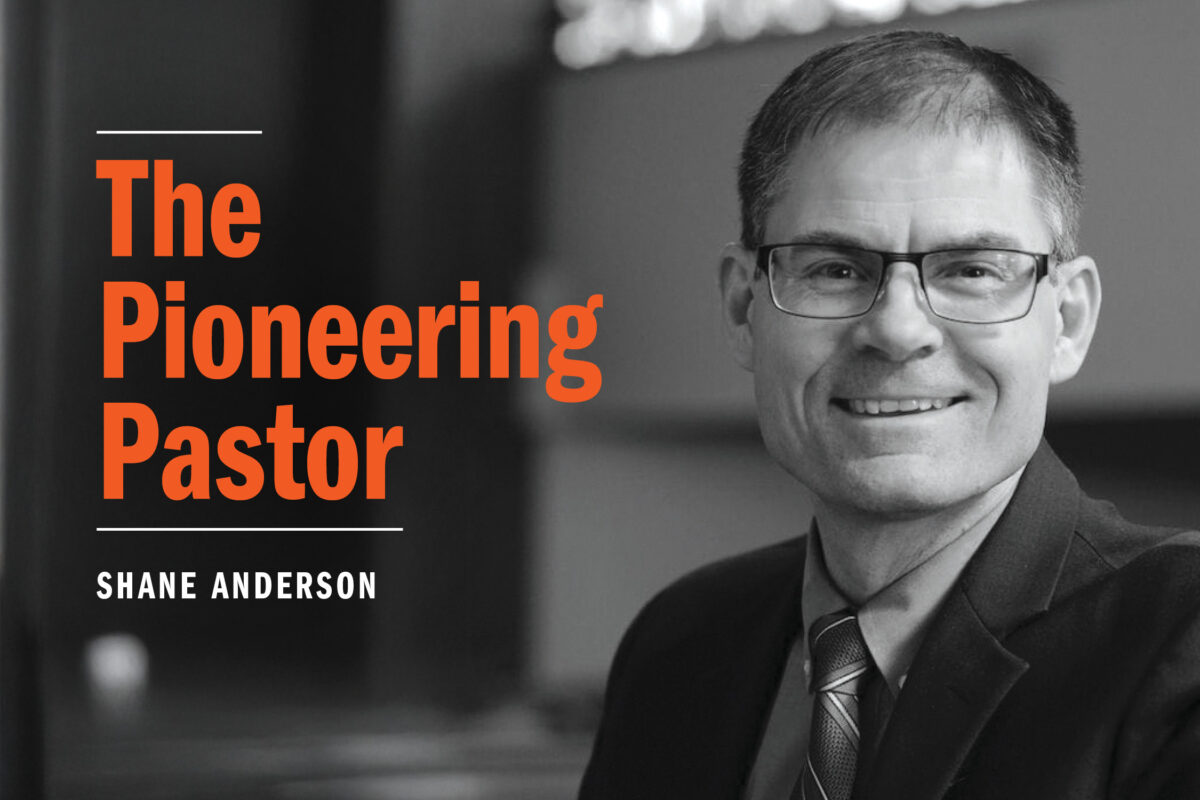
I recently preached two sermons[*] that caused a bit of a stir in American Adventism. This is not a credit to me, but rather is the result of the inherently provocative nature of the topic the sermons covered: the addiction of Western Adventism to “settled pastors.” And given the level of both joy and rage the sermons generated, I thought it might be helpful to share more broadly on this important issue via the Adventist Review.
If you’ve never heard of settled pastors, you’re not alone. In my experience very few Adventists are familiar with the term, and fewer still know either the history behind them or the immense damage their role has caused in the West. But in the early days of the Seventh-day Adventist Church the term was widely known—and exceedingly polarizing. Our leading pioneers generally (and, as shall be seen, vigorously) denounced the role as anathema to the cause of Christ, while increasing numbers of church members in the run-up to the twentieth century wanted the role to become more and more a part of church life. Settled pastors rarely resulted in neutral opinions.
Today settled pastors are the kind of pastor most churches in the global West (the United States, Europe, Australia, etc.) are currently served by. It is also the kind of pastor that an increasing number of churches in the rest of the world wish to have—a development that must, in my opinion, be squelched as soon as possible.
Scripture, Adventist history, and common sense make abundantly clear that the role of settled pastors is inimical to church growth.
What exactly is a settled pastor? In Western Adventism today, a settled pastor is one who stays for roughly three to seven years over the same church or handful of churches. They do nearly all the preaching in those churches, chairing various committees in those churches, visiting members, marrying young couples, burying deceased members, resolving church conflicts, and generally seeking to provide chaplain-type/felt-needs care to their flock(s). Tragically, because of crippling time constraints inherent in attending to established members in this way, settled pastors tend to do public evangelism only sparingly, and they almost never plant new churches—in fact, in my 30 years of pastoral ministry I’ve found that planting new churches never enters the mind of the vast majority of settled pastors.
And again, every three to seven years these pastors will move to another church or district and repeat this pattern of ministry, often leaving very little kingdom fruit to show for it . . . which leads to an extremely important point: The problem with settled pastors is rarely the pastor, but rather the ministry role that they fulfill. Settled pastors are some of the most dedicated, humble, loving people I know! And they became pastors because of a sincerely held sense of calling that radically altered the course of their lives. Nothing I say in this series of articles is meant to impugn the character or motives of such fine examples of Christ’s character.
This, however, in no way diminishes the fact that the role settled pastors have been trained to fulfill is negatively correlated with both spiritual and numerical growth—in fact, in my estimation it is not hyperbole to say that the West’s addiction to the settled pastor role is killing the church. True, there is no empirical way to precisely calculate how things would be different if the West didn’t have settled pastorates. But Scripture, Adventist history, and common sense make abundantly clear that the role of settled pastors is inimical to church growth.
During the following months the Adventist Review will see a number of installments from me on this subject. And if history is any indication, some of you will find reasons for rage in reading them, while others, joy. Regardless, please accept them in the spirit they are given: as a help for building the church up, interrupting or preventing its decline, and hastening the Lord’s return.
[*] For GYC Final Charge sermon (delivered Dec. 31. 2024), see https://www.youtube.com/live/2_z2xPria38?si=BuWzFvKRStia2oTV . For Pioneer Memorial church sermon (delivered Apr. 19, 2025), see https://youtu.be/HYkHRg4xqug?si=0P1UozRJfpsGtf-t .
