
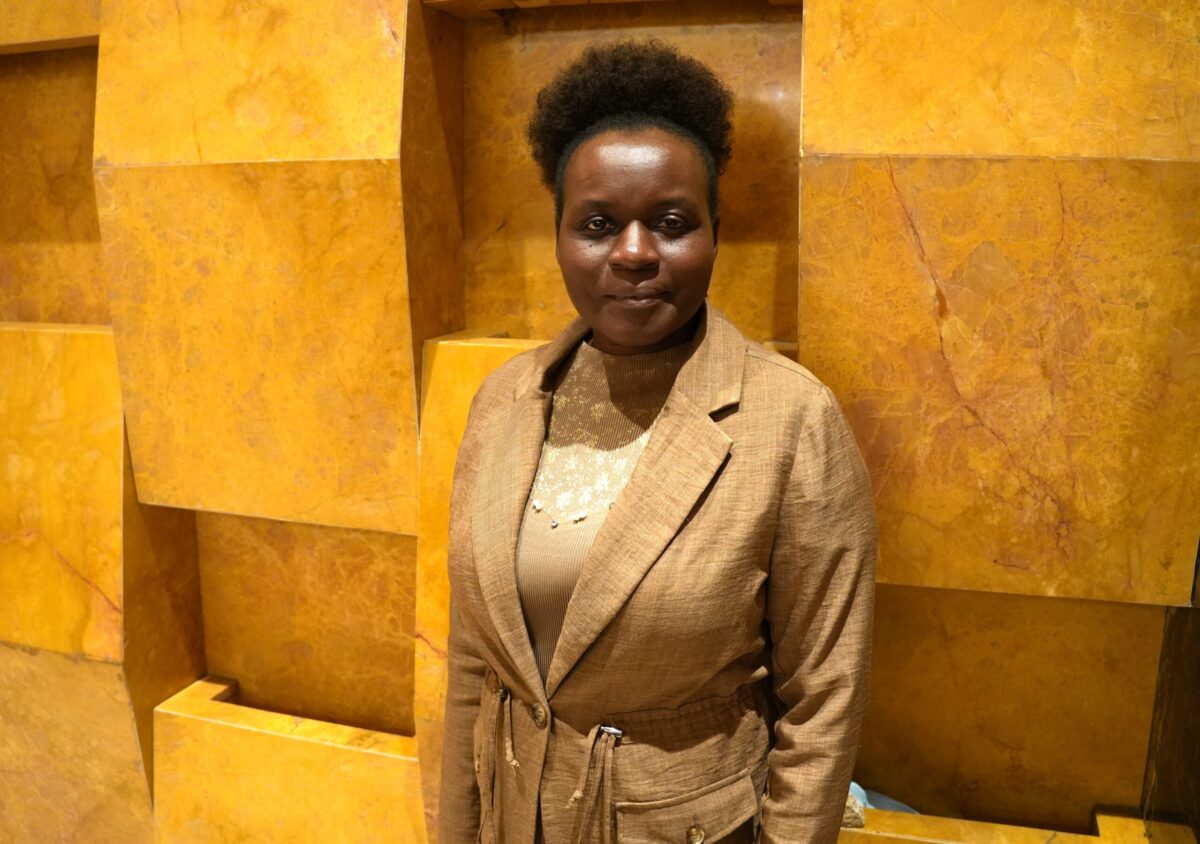
A young missionary Zimbabwean’s three-month teaching stint in Mozambique decades ago became a story of educational leadership that is still being written. In February Esther Landane (née Masarira) was inaugurated as the new vice-chancellor (president) of Adventist University of Mozambique (AUM) in Beira, Sofala.
According to Landane, it was never about her. “I don’t feel it a personal privilege,” she said, according to Integrity magazine from Mozambique. “This is an institutional and spiritual mission, whose educational project is aligned with the Seventh-day Adventist identity, values, and goals.”
From Zimbabwe to the World
Landane was born and grew up in Zimbabwe, arriving in Mozambique as a missionary in 2005. By then, she had experience serving one year as a volunteer missionary teaching English in Moscow and then in Kaliningrad, in the Russian Federation.
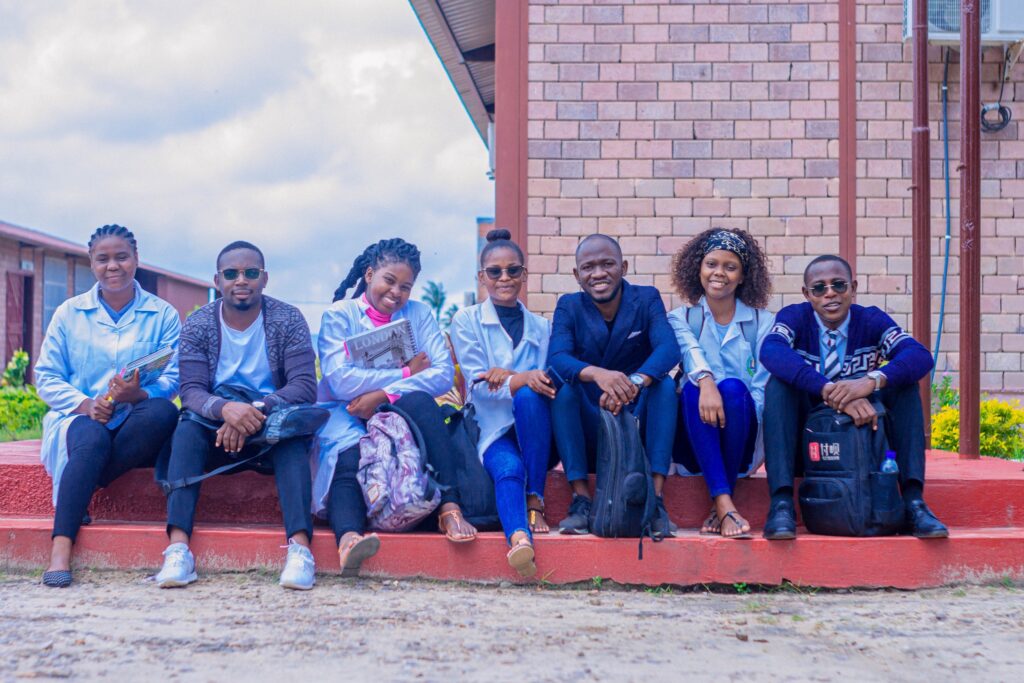
After her stint in the Russian Federation, Landane returned to Africa to study at Solusi University, the Adventist university in Zimbabwe. During those years she worked as a literature evangelist in Botswana to pay for her tuition.
Arrival in Mozambique
Eventually Landane was invited to move to Mozambique to teach English at what was then Mozambique Adventist Seminary, the institution in charge of preparing future pastors. “All the countries around Mozambique speak English, and students could finish full degrees only in an English-speaking university,” Landane explained.
Seeing that, the Mozambique Union Mission developed a plan to teach basic English to theological seminary students before they were sent to pursue their studies at the Adventist university in Zimbabwe or Zambia.
“It was supposed to be just a three-month contract,” Landane shared. When testing the students after three months, however, leaders soon found out that much more would be needed if they hoped to get students to study in English and eventually serve in Mozambique.
According to Landane, it was the seed that triggered the dream of opening a Portuguese-speaking university in Mozambique. “Leaders voted to upgrade the seminary, but it was not an easy task to get a charter authorizing the new university to open.”
Growing Pains
By 2008 she had met Mozambican Acácio Landane, got married, and had a daughter. The family then decided to stay in Mozambique to support the church’s educational efforts.
Eventually the school opened and students were admitted, but with no charter, Landane said, students still needed to transfer to Zambia to get their official degrees. Meanwhile, Landane taught at another university outside the Adventist educational system to support her family. But she didn’t stop there. Landane went on to get a master’s in business administration and a Ph.D. in development studies.
In 2016 Landane joined the now-chartered AUM to teach, and in 2022 she became the deputy chancellor in charge of academic affairs.
Currently the school has about 1,000 students, Landane reported, but only 20 percent of them are Seventh-day Adventist. “Most are either Pentecostal, from other Protestant denominations, or Muslim,” she shared, something that represents a significant mission field.
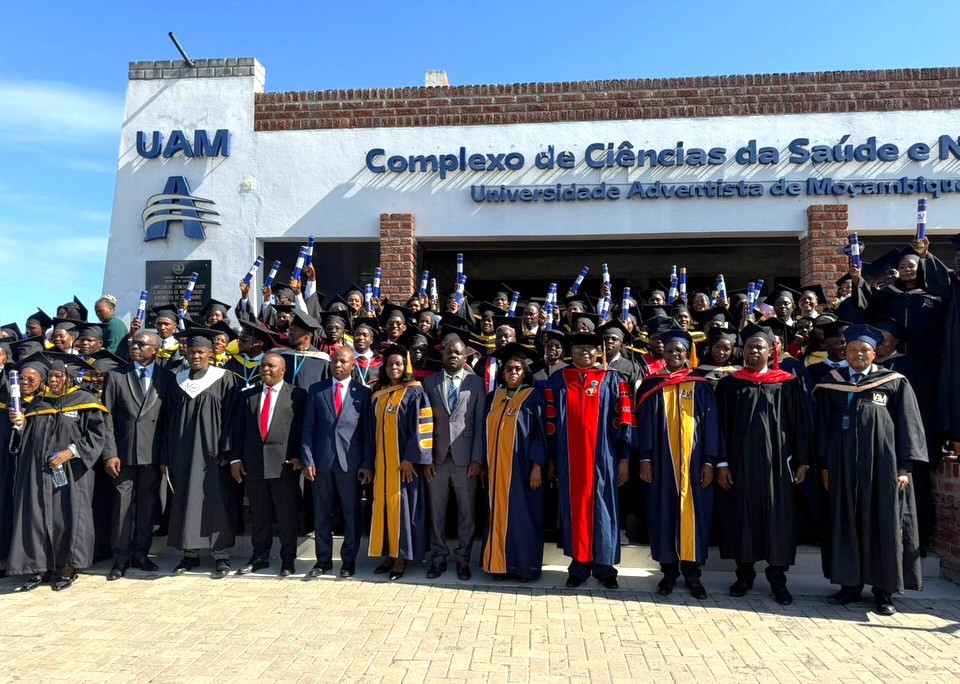
The school has now opened a second campus north of Beira, in Quelimane, Zambézia.
Church and Government Partnerships
Since becoming president of AUM, Landane has been working to strengthen the school’s relationships and partnerships with church leaders and government officials.
In a recent visit Heleotero Marange, an Adventist leader in the province of Zambézia, visited the Quelimane campus and celebrated the progress of the educational project there. “Stay firm in your mission of preparing competent professionals that may be rooted in the Bible and the fear of God,” Marange told school leaders.
Manuel Rodrigues, secretary of state in Sofala, Mozambique, visited the Beira campus in early May, where he highlighted the role of the school in training qualified professionals. Rodrigues called school leaders to keep training and preparing competent professionals “capable of meeting the demands of the labor market and, at the same time, fostering entrepreneurship and creation of self-employment.”
For her part, Landane emphasized the good relationship between the government and the school. “We want to strengthen our cooperation,” she told Rodrigues, “as we strive to reach a wider audience and promote social inclusion.”
Meeting the GC President
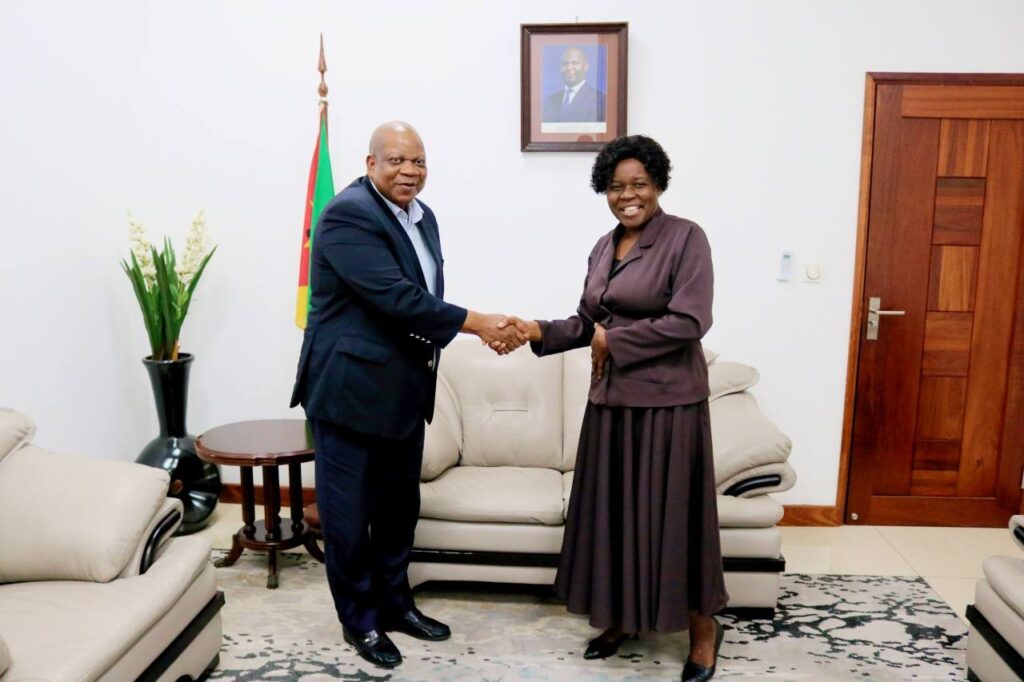
On May 21 Landane met General Conference president Erton Köhler on the sidelines of evangelistic meetings he led during the Impact Mozambique initiative in Maputo. According to AUM sources, Landane shared with Köhler some of the university’s expansion projects as she highlighted “the progress achieved, the challenges faced, and the prospects for growth” in the national and international context. “I shared about ongoing projects, academic initiatives, efforts made toward quality teaching, scientific research, and comprehensive student training,” Landane said.
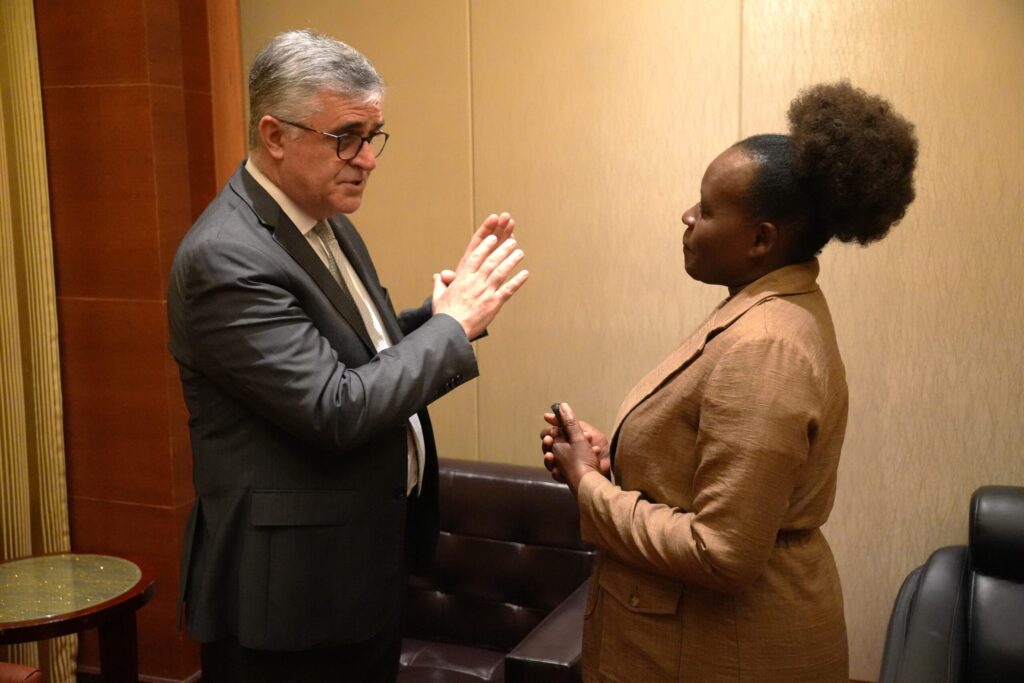
The meeting ended with a special moment, as Köhler interceded before God, asking Him to keep blessing the school, its leaders, and its educational mission. Southern Africa-Indian Ocean Division president Harrington S. Akombwa and Mozambique Union Mission president Jose Moreira also participated in the meeting.
“My mandate is to develop competent professionals, responsible citizens, and trustworthy leaders, ready to respond to contemporary challenges with ethics, faith, and social responsibility,” Landane had told Integrity magazine in February. “You’ve heard about people who get a doctoral degree, but they do not become wholesome human beings,” she said. “At the Adventist University of Mozambique our mission is to form wholesome human beings.”
