
Q. My family and I disagree on issues quite frequently. I often wonder how my husband and I got married when we often see issues so differently and from a different perspective. It is quite the same with our children, who are college students and have strong opinions of their own that differ from mine. What can I do to do a better job of resolving conflicts with my loved ones or even disagreeing in a less-contentious way?
A. First, take heart—conflict is completely normal in families! The fact that you and your family members see things differently isn’t a sign of failure; it is actually a sign of healthy individuals with their own thoughts and perspectives. The key isn’t avoiding disagreements, but learning to handle them in ways that bring you closer together rather than drive you apart.
The Bible offers some surprisingly practical wisdom for this challenge, particularly in two passages that work beautifully together: Matthew 18:15-17 and Ephesians 4:26, 27.
Start Small and Private (The Matthew 18 Approach)
Jesus outlined a simple three-step process for handling conflicts that still works today:
Step 1: Talk directly to the person. When someone hurts or frustrates you, resist the urge to vent to everyone else first. Go straight to them. Say something like “Hey, when you said X, it really bothered me. Can we talk about it?” This private conversation gives both of you space to be honest without feeling embarrassed or defensive.
Step 2: If that doesn’t work, bring in a neutral person. Sometimes we need a third party to help us see the situation more clearly or to mediate the conversation. Choose someone both of you trust and respect—maybe a family friend, pastor, or counselor.
Step 3: If needed, involve the broader community. In serious situations in which someone is consistently harmful or unwilling to work things out, you might need to involve others for accountability and support.
What’s brilliant about this approach is that it starts gently and escalates only if necessary. Most conflicts can be resolved at step 1 if we’re willing to be brave and kind at the same time.
Don’t Let Issues Fester (The Ephesians Principle)
Paul’s advice is beautifully straightforward: “Do not let the sun go down on your anger.” In other words, deal with conflicts quickly before they grow into bigger problems.
Small changes in how we handle conflict can lead to significant improvements in our relationships.
Here’s what happens when we let anger simmer: we start seeing everything our family member does through a negative lens. That innocent comment becomes an attack. That helpful gesture becomes manipulation. Before we know it, we’re in a pattern in which we assume the worst about each other.
The solution? Address things while they’re still small. This doesn’t mean you have to have deep conversations about every little annoyance; but don’t let the big stuff sit and grow.
Practical Tips for Your Family
For disagreements with your husband: Remember that different perspectives can strengthen your marriage. Try saying, “I see this differently, and I’d love to understand your viewpoint better.” Make it about curiosity rather than convincing.
For conflicts with your college-age children: They’re at an age where developing their own opinions is crucial for their growth. Instead of seeing their different views as a rejection of your values, try viewing them as signs of their developing maturity. Ask such questions as “What led you to that conclusion?” or “Help me understand why this matters to you.”
For all family conflicts:
- Take a breath before responding when you’re upset.
- Focus on specific behaviors rather than character attacks (“When you interrupt me” rather than “You never listen”).
- Use “I” statements (“I feel unheard when . . .” rather than “You always . . .”).
- Remember that the goal is understanding and resolution, not “winning.”
The Bigger Picture
Here’s the beautiful truth: Families that learn to work through conflicts well actually become stronger and closer than those that avoid disagreements altogether. When you successfully navigate a disagreement with love and respect, you build trust and deepen your relationships.
Your different perspectives aren’t a bug in your family system—they’re a feature. They make you more complete, help you see blind spots, and create opportunities for growth that wouldn’t exist if you all agreed on everything.
A Final Word of Encouragement
Remember Jesus’ promise that with God, “all things are possible” (Matt. 19:26). This includes healing in your family relationships and learning new ways to love each other well, even through disagreements.
Start small. Pick one relationship and one conflict resolution skill to work on this week. Maybe it’s speaking up about something that’s bothering you instead of letting it build up. Maybe it’s asking curious questions instead of making assumptions. Small changes in how we handle conflict can lead to significant improvements in our relationships.
You’re not looking for a family without disagreements—you’re building a family that knows how to disagree with love, respect, and grace. That’s a gift worth pursuing.
You are in our prayers.

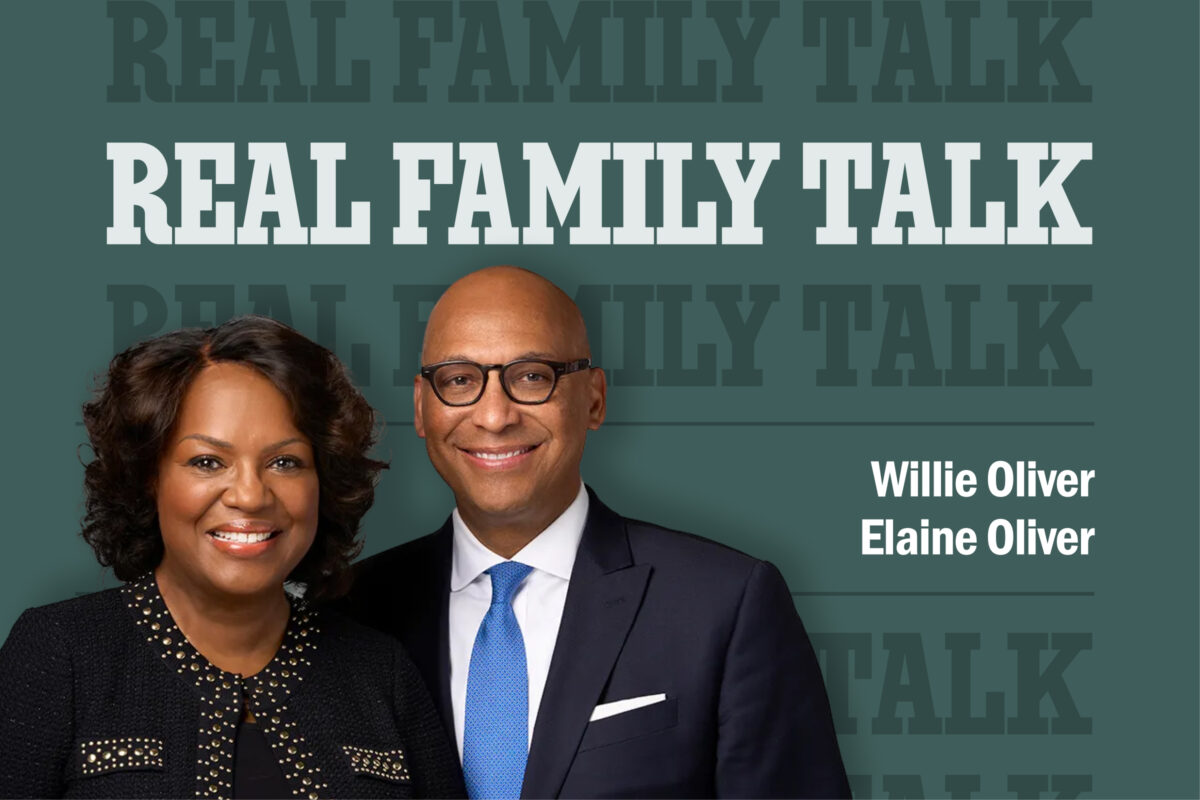
Willie and Elaine Oliver
Willie Oliver, Ph.D., CFLE, an ordained minister, pastoral counselor, family sociologist, and certified family life educator, is director of the Department of Family Ministries at the world headquarters of the Seventh-day Adventist Church. [email protected]
Elaine Oliver, Ph.D., LCPC, CFLE, a licensed clinical professional counselor, counseling psychologist, educational psychologist, and certified family life educator, is associate director for the Department of Family Ministries at the world headquarters of the Seventh-day Adventist Church. [email protected]
