
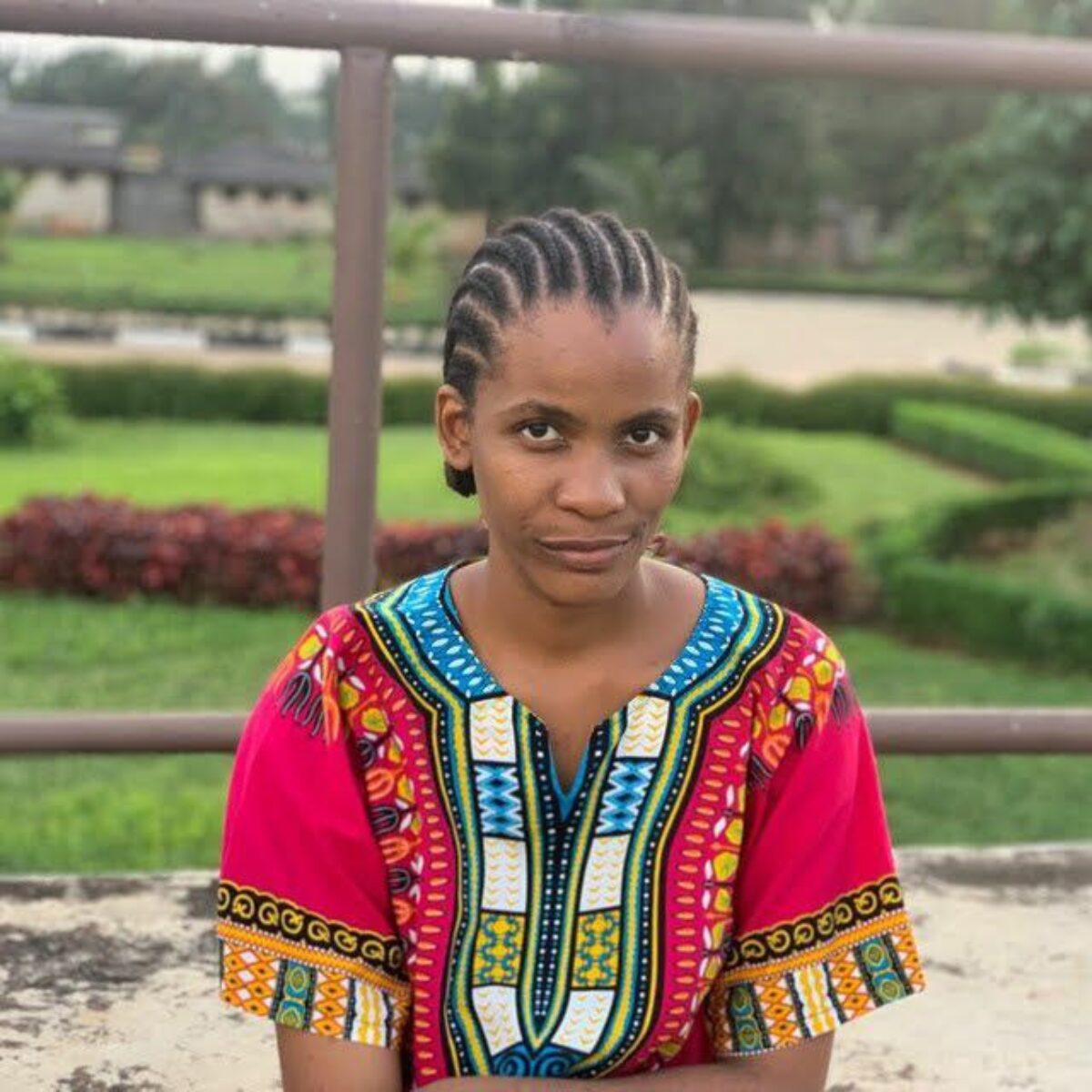
To my Catholic family, every other church was simply labelled “Pentecostal”—a catchall for the confused who had strayed from the one true faith. Before entering university, I had never heard the word “Adventist” or “Seventh-day Adventist.” Coming from the Igbo tribe, the Catholic Church was all I knew. My parents were Catholic, my grandparents were Catholic—everyone I knew was Catholic.
I never imagined that I, a third-generation Catholic, a member of the prestigious Saint Michael the Archangel Society, would one day be among them. So when a student in the chapel asked, “Are you an Adventist?” I replied, “Nah, I’m just a member of the Sabbath School Department.”
This is the story of how that reply became untrue and how I became a Seventh-day Adventist through the simple act of serving in an Adventist university chapel.
A New Beginning at Babcock
A wave of fever and despair washed over me when I fell sick and missed the admission exam for my university of choice. The only institution still open for A-levels was Babcock University, a Seventh-day Adventist university in Nigeria. I had no choice but to sadly go to this “glorified high school,” as it was derisively called because of its strict disciplinary laws and moral expectations compared to other secular universities.
Arriving at the school, I found it to be quite calm. I had been the prayer coordinator in my high school, so I was pleased with Babcock’s prayer meetings, which were surprisingly serene for a “Pentecostal church.” Their Bible studies on Wednesdays and Fridays were tranquil and insightful. I had decided not to volunteer for any duties, as my schoolwork was demanding. I chose the chapel within my hall of residence so that it was nearby and I wouldn’t have to stress much, as services were held almost every other day.
“Anyway, just four years, and I will be done,” I told myself.
Another twist of fate occurred when it was announced that all A-level students would worship at the newly built chapel adjacent to the library. That was a sad shock. The library was far away, so I would have to leave at least 30 minutes early to get there.
The chapel turned out to be an uncompleted building; it was a skeleton of concrete and steel, still under construction. When rain fell, a damp, earthy smell filled the air, and the wind whipped through the gaps in the walls, forcing us all to squeeze toward the center to avoid getting drenched.
The pastors were interesting people. Pastor Collins was fair yet strict, demanding attendance and decorum, but he had a kind smile and always offered heartfelt prayers for our parents, our spiritual growth, and our academic success. Pastor Gift was quiet and always asked about our well-being.
But there was little equipment—just an old piano and two microphones that didn’t always work. Compared to other chapels, especially my former one, this didn’t seem promising. In fact, before the end of the semester, more than 70 percent of the students had left the chapel.
Accepting these new teachings felt like betraying my parents, my grandparents, and every ancestor who had knelt in a Catholic cathedral.
I decided to stay, unsure of the consequences of flouting the rules and not wanting to face embarrassment. The church also really needed help. The few remaining students had to fill multiple roles in up to four or five departments for the proper functioning of the small chapel. I joined the Welfare, Ushering, and Treasury departments because they had the fewest members. Plus, they were quite “obscure.”
My duties included purchasing water for the church, helping with church preparation on Friday afternoons, and counting and recording the offering on Sabbath before returning it to the headquarters church.
Learning the Word
Amid these duties, it was to my surprise that Pastor Collins asked me to teach Sabbath School. I almost laughed.
“Pastor, you know I’m not an Adventist,” I said, hoping to gently decline.
But he just smiled, a kind, unwavering look in his eyes.
“I know,” he said gently. “But you are a student of the Word.”
His confidence in me was both terrifying and deeply heartwarming. Pastor Collins and I had developed a cordial relationship of mutual respect and service, as I was usually among the first 10 students to arrive early for church. We also shared other duties in the treasury and welfare departments. He once told me that he had been a Catholic seminarian who left the seminary after reading The Great Controversy. While I respected him deeply, I felt sad that he would leave such a high calling as a priest to become a pastor.
I politely agreed to his request and began studying the lessons. My days fell into a new rhythm: my Catholic devotion in the morning and the daily Sabbath School lesson in the evening. Each week took me deeper into the Bible, with verses to study and a relevant quote for reflection on Friday. The pink pages, filled with deeper insights just for teachers, became my Friday evening ritual. As a law student, articulating the main points was not a problem. Week by week I was wrapped up in the daily act of studying my lesson. Often several students would walk up to me and ask if I was a Seventh-day Adventist, to which I would reply in the negative.
This devotion to the lesson soon began to bleed into my personal devotions. My fingers would trace the words in the Sabbath School study guide, and my mind would race. The interpretation of Daniel 2 was undeniable, and historical evidence from the internet on the Lisbon earthquake and the Great Disappointment in 1844 was compelling.
Yet, in my heart, I could hear the faint, familiar rhythm of the rosary. To accept these new teachings felt like betraying my parents, my grandparents, and every ancestor who had knelt in a Catholic cathedral. I began to pray, feeling trapped at a crossroads. My interest in my Catholic devotions waned; that time was now spent reading the Bible more deeply, searching for such truths as an eternally burning hell, purgatory, and transubstantiation, only to find they were not in the Scriptures. The real bone of contention, however, was accepting the Sabbath message.
I continued praying, and in my 200-level class, we had a Week of Prayer. A Zimbabwean pastor, Irvine Gwatiringa, came to preach at the university. The theme song, “Wonderful Words of Life,” echoed in the hall. But for me it was more than a hymn; it was a battle cry for my soul. Pastor Irvine’s voice broke with emotion as he spoke of the Sabbath as a seal of God’s love. With every word the wall I had built around my Catholic heart crumbled. He shared deep messages of how far God was willing to go and how much Jesus had sacrificed for us, truths on the state of the dead, and finally, the Sabbath as a covenant and the seal of God.
Tears streamed down my face as I walked forward to answer the altar call, sincerely worried and trembling, thinking about what the future would hold. I knew that I loved God and that I wanted to serve Him, yet voices whispered that this would be a lonely and stressful journey. Who did I know who would possibly join with me? My favorite Catholic hymn, “The Old Rugged Cross,” played on repeat in my mind.
Then my eyes rested on the vice chancellor beside his wife, and they looked so happy. I wanted that peace. I remember the couple welcoming us with a hug despite their distinguished position, and I desired such a meek and humble spirit of service and family.
My New Life in Christ
I was baptized on February 1, 2019, and Pastor Collins began postbaptism classes with me and other baptismal students. Interestingly, our small chapel had almost 10 baptisms that year. I read the Fundamental Beliefs of Seventh-day Adventists and The Great Controversy, which made me weep at the thought of how I might have been lost and how privileged I was to have found this truth. This severed any remaining affection I felt for the Papacy, but I still had fears and uncertainties.
I prayed earnestly. As my GPA was 4.8 out of 5, I was quite worried about what my future would hold. I wanted to be a diplomat working in a foreign consulate. In addition, my mind struggled with how I would tell my parents about my new beliefs and convince them that I hadn’t been brainwashed.
When I arrived home, I told them, and my mother was deeply disturbed.
“It’s not possible,” she declared, her voice tight with disbelief and hurt. “You cannot be baptized again; you were baptized as a child. You will not leave the family church after I have paid so much for your school fees.”
I was not allowed to worship at home.
Miraculously, my dad told my mom to calm down, saying it was probably a “phase.” I quietly kept the Sabbath and would usually lock myself in my room and study the Bible during Sabbath hours. I also abstained from unclean foods. This meant I had to cook separately, which irritated my mom. Being affluent, she was quite ashamed when I abstained from unhealthy family buffets and chose plant-based meals instead. My decision not to wear jewelry made me look, in her opinion, underdressed compared to my cousins and family friends, who often asked what had happened to me. She would reply, “I don’t know, but she’s a completely new person. I allow it only because of her good character and because she’s doing well in school.”
He has a way with all who are willing to take a step of faith, even one as little as a mustard seed.
During the COVID-19 break, tired of seeing me locked in my room, my mom told me there was a Sabbath church in the next estate. Remembering that Adventist churches often open on Fridays, I walked to the area and looked for the church. To my dismay, it was a spiritist Sabbath church, not Seventh-day Adventist. I was deeply saddened, but something told me to ask a few strangers. They directed me to a small, uncompleted building that looked uncannily like my school chapel.
The door was locked, but as I looked up, my heart leaped. There I saw an old, washed-up poster board with the inscription “SDA Church—Sanctuary of Deliverance.” I jumped for joy. How could an Adventist church have been right on my doorstep all my life without my knowing? The next Saturday morning I attended a warm and familiar service, very similar to that at my school. I worshipped there until school resumed.
In my graduating year my mom shared her concerns about my career and marital prospects and what my future would hold as a Sabbathkeeper. I shared this with Pastor Collins, and he asked me to have faith. “Hasn’t God proved faithful?”
Indeed He had! No one knew that I used my personal stipend every Friday to buy 10 bags of water for the church. And indeed, all through school I never lacked financially. Miraculously, there was always enough money by Friday to buy the 10 bags and even extra for myself.
Also, my thesis, “Globalization, Health, and Seventh-day Adventism,” was finally approved, despite the challenges I had encountered initially. I graduated with a first-class degree in international law and diplomacy, plus two associate diplomas in defense and security studies and fraud auditing—despite the hours spent serving in my small chapel. Seeing how God had led me, I knew He would take care of me going forward. I rested in this assurance as I graduated among the top five students in my department.
Surprised by His Grace
Now, about six years later, that student’s question in the chapel echoes differently. I am no longer just a member of a department; I am a member of the global Seventh-day Adventist family. Like Rahab, I have been surprised by His grace, grafted into His body.
I am now the Sabbath School and Personal Ministries leader for my district, where I plan evangelism outreach and continue to teach Sabbath School at my local church. I am also a volunteer prayer team coordinator for GYC Africa, and have served in the Abuja Mission, northern Nigeria. I work as a research manager for an international humanitarian organization while completing my master’s degree on scholarship.
My mom once said, “God has His ways with you.” He has a way with all who are willing to take a step of faith, even one as little as a mustard seed.
I look forward to raising an Adventist family, going on missions, and foot washing with my daughter someday if Jesus tarries. While waiting, I hold on to this quote by Ellen White: “We have nothing to fear for the future, except as we shall forget the way the Lord has led us, and His teaching in our past history.”[*]
[*] Ellen G. White, Life Sketches of Ellen G. White (Mountain View, Calif: Pacific Press Pub. Assn., 1915), p. 196.
