
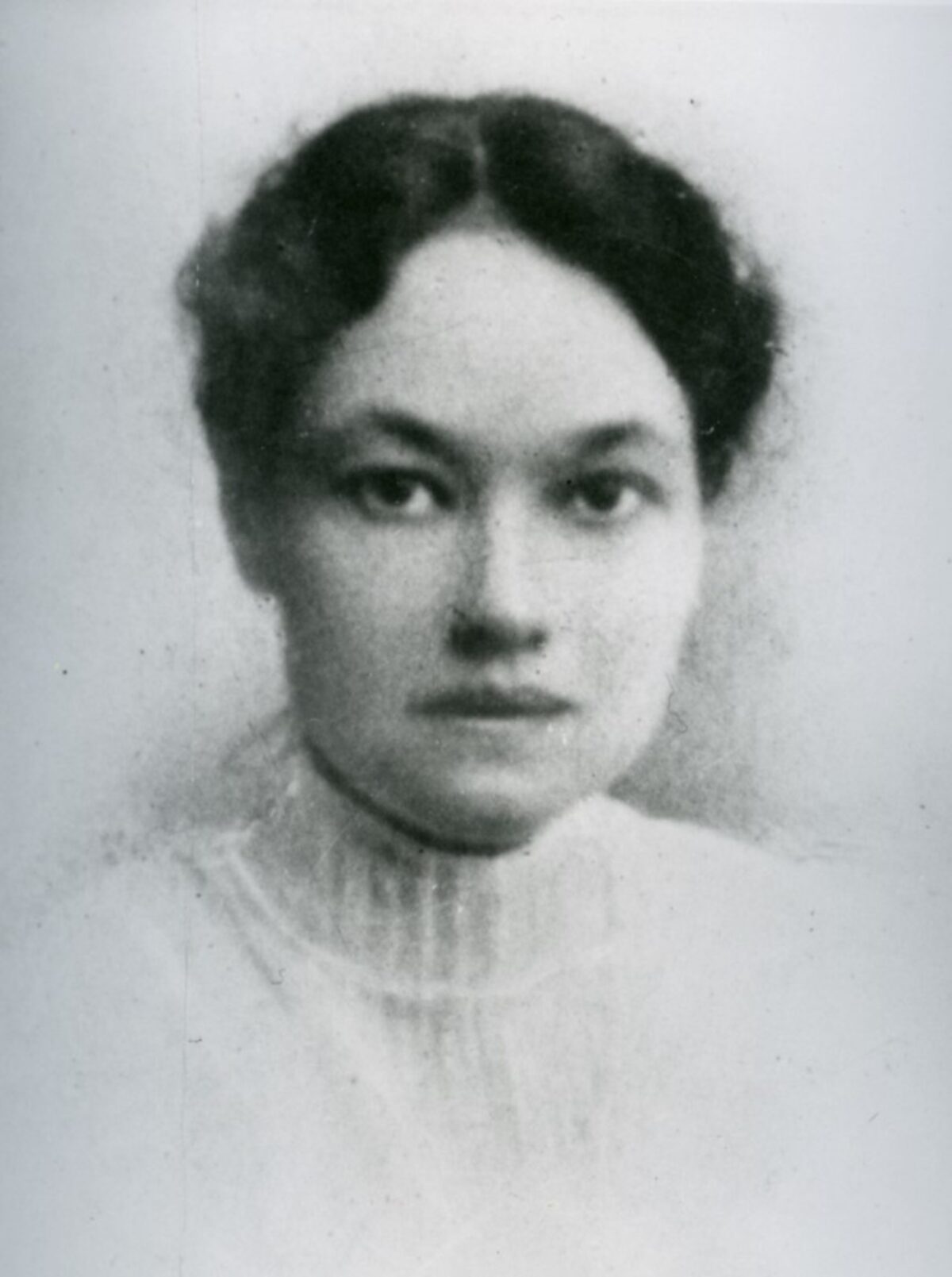
This article draws upon Passmore Hachalinga’s biography of Rosie Le Même and Marie-Noëlle Bosdedore’s history of Rosie Le Même Adventist Nursing Home, published in the Encyclopedia of Seventh-day Adventists (ESDA), available at encyclopedia.adventist.org. It was prepared by Dragoslava Santrac, ESDA managing editor.—Editors.
In the lush beauty of Mauritius, which is often called the “Pearl of the Indian Ocean,” God kindled a small but steady flame that would grow into a movement of hope. It all began with the faith of a young woman named Rosie Le Même.
Rosie never planned to start a movement. She just wanted to follow God with her whole heart. Because of her quiet courage and steady faith, the Seventh-day Adventist message took root in Mauritius and spread to other places.
Early Longings of the Heart
Rosie (Rosalina) Le Même was born on July 22, 1876, in Rose Hill, Mauritius. She was the fifth daughter in a Presbyterian family. Her father and mother were devout members of their church, raising their daughters Annie, Alice, Lydia, Sylvia, and Rosie in a Christian home.
Rosie faced loss early in life. Her mother died when she was 9. Later her father married her aunt, “Aunt Jopine,” and the family grew. Despite these changes, Rosie became known for her kindness and generosity. She never kept more than two or three dresses in her wardrobe, believing she always had more than she needed and gladly giving the rest away. Still, Rosie felt a deep spiritual longing beneath her kindness.
By 1906, when Rosie was 26, she felt restless and unhappy. She went to church regularly, but felt she was not living as God wanted. She often cried during services and could not sing the hymns. Social events no longer interested her, so she spent more time reading the Bible.
Rosie was drawn to the prophecies in Daniel and Revelation, but they confused her. She noticed that in Bible times people looked for a prophet when they were unsure. Rosie wished for the same kind of guidance and prayed for understanding of biblical prophecies.
One night while Rosie prayed, her room filled with a bright light. She heard a clear voice say, “Rosie, you must go to Europe, and God will show you what He is planning for you.” Rosie felt overwhelmed but thankful. She thanked God for the message and felt she finally had a clear purpose in life.
A Journey to Europe and to Truth
In July 1910 Rosie left Port Louis, Mauritius, for Europe, hoping to improve her health and enjoy a period of rest. She planned to visit England, France, and later Switzerland.
In Lausanne, Switzerland, Rosie received a flyer about Adventist lectures on the prophecies of Daniel 8 and the judgment. During the lectures the topics that once confused her now made sense. She started attending more Seventh-day Adventist meetings and soon accepted the Adventist faith. In 1912 Herbert H. Dexter, president of the Leman Conference, baptized her.
While in Lausanne, Rosie also learned about a prophet for the last days, Ellen G. White, who lived in California. For a time Rosie wanted to visit the United States and meet Mrs. White. Yet another conviction pressed upon her heart with even greater urgency: Mauritius must hear this message.
Before going home, Rosie bought as many of Ellen White’s books, tracts, and magazines as she could carry. She planned to share them with people all over Mauritius.
Rosie returned to Mauritius in June 1912, feeling healthier and full of joy. Her sisters greeted her at Port Louis. She quickly shared her new faith with Lydia, Alice, and others. Seeing the change in Rosie and the Bible-based beliefs she brought, her sisters gladly accepted the Adventist message.
Two Converts, One Mission
Meanwhile, similar things were happening elsewhere.
Another Mauritian, Elysee (Elijah) Moikeenah, born into an Anglican family, had encountered the Adventist message in Australia during the first half of 1912. A sailor employed by Charles Jacob & Sons Company, he had received a copy of Les Signes des Temps (French Signs of the Times)while docked in Melbourne. Convinced by the biblical truth and explanations he read, he was baptized between March and June of the same year at what is now the North Fitzroy Seventh-day Adventist Church, located in an inner-city suburb of Melbourne.
The faith that started with two Mauritians who converted abroad grew into a movement that spread across the region.
Moikeenah went back to Mauritius before Rosie and started sharing the Adventist message with friends. He lent out Adventist books and answered questions using the Bible. When Rosie returned, she heard about Moikeenah’s preaching on the Sabbath and Christ’s return. After they met and realized they shared the same faith, Rosie asked him to help with the evangelistic work and paid him a salary. Moikeenah and Rosie shared the same goal: to continue spreading the Advent message in Mauritius.
In 1916 both were recruited as workers for the European Division Conference. Meanwhile, Lydia and Alice worked tirelessly alongside her.
As more people became interested, opposition also increased.
Faith Under Fire
Rosie’s evangelistic efforts caused controversy. As more people joined, resistance from the community grew stronger. Eventually she was removed from the Presbyterian Church.
Rosie did not give up. As the group of believers grew, she asked the Mission Board to send a missionary to help organize their efforts. The response came in the person of Paul Badaut, a pastor and one of the important figures in the first generation of Seventh-day Adventists in France. He arrived in Mauritius on May 2, 1914, and found 24 individuals preparing for baptism. On May 9 he conducted his first Sabbath service and encouraged the little flock.
But the opposition only increased. Sometimes people openly mocked the church, calling it the “Badaut Church” and its members “Badauts.” The similarity of Badaut’s name to the French word badaud (“gawker,” “idler”) may have added a subtle tone of ridicule, suggesting followers were merely “gawkers” or naive adherents. Angry crowds even threatened them. Rosie and Lydia stayed by Badaut’s side, helping him share the gospel and welcome new members during hard times. On September 12, 1914, Badaut baptized the first group of Mauritian Adventists in the muddy river near Rose Hill. The water was cloudy, but the people being baptized were full of joy.
Little could they imagine that years later, in 1989, Salisbury Street in Rose Hill would be renamed “Pasteur Paul Badaut Street” in recognition of his pioneering contribution. What had once been scorn became a testimony of respect.
A Mission Beyond the Island
God blessed their dedication and sacrifice tremendously. By 1920, only six years after the first baptism, there were six organized churches of Adventists in Mauritius.
But the movement did not stay limited to Mauritius.
From Mauritius the Adventist message reached Madagascar in 1917 through tracts and personal witness. A young man named Tuyau shared the faith with Andre Rasamoelina, an inspector of Protestant schools. Contact with Badaut and later Bible studies with Marius Raspal led to the opening of the first Sabbath School in Madagascar on October 2, 1926. In 1927 Rasamoelina and three others were baptized.
Rodrigues Island felt the influence as well. In 1925 E. Michel of Mauritius settled in Port Mathurin. His witness bore fruit, and in 1929 Aimé-Jacques Girou, an Adventist pastor and missionary from France, came to the island to strengthen in faith and baptize seven converts.
The mission work continued to spread. In 1930 Daniel Ignace carried the message to the Seychelles. Despite difficulties, 21 converts were baptized near Victoria on Mahé, and a church of 23 members was organized with Ignace as elder.
The faith that started with two Mauritians who converted abroad grew into a movement that spread across the region.
A Life Brief but Faithful
As the mission grew, Rosie’s health got worse. While still young, Rosie learned she had heart problems and was told to avoid too much activity. Even so, she kept sharing the Adventist message whenever she could, trusting God to heal her. Badaut and other church members prayed for her often.
In 1919, at just 39 years of age, Rosie Le Même died. Her earthly work ended early, but her influence did not. Her sister Lydia continued her work, traveling around Mauritius as a Bible teacher until the remarkable age of 89.
Rosie’s legacy turned into something lasting. On February 11, 1963, the Rosie Le Même Adventist Home was registered by the government of Mauritius as a humanitarian society. Located in Quatre-Bornes, the home provides care for elderly people. In 2014, during the Mauritius Conference’s one hundredth anniversary celebration of Adventism on the island, the Rosie Le Même Adventist Nursing Home received an award for outstanding contribution in health care services.
The Adventist presence in Mauritius, from early river baptisms to organized churches, and from mockery to respect, shows what God can do through people who are willing to serve.
Awaiting the Morning
Rosie Le Même rests in her grave, awaiting the return of Jesus Christ, whom she served with love and trust. She never looked for fame. She just followed her beliefs. Because of her choice, the message spread from Lausanne, Switzerland, to Rose Hill, Mauritius, and then to Madagascar, Rodrigues, and the Seychelles. More than 100 years after Rosie came back from Europe, the Adventist movement she helped start is still going. As of June 30, 2025, the Mauritius Conference of Seventh-day Adventists, including Rodrigues Island, had 37 churches and 5,528 baptized members.
History remembers Rosie as the first Seventh-day Adventist in Mauritius. Heaven remembers her faithfulness. The church in the Pearl of the Indian Ocean continues because one young woman chose to pray, listen, and act.
