May 5, 2022
Theological Symposium Expounds on the Book of Daniel
by

The biblical book of Daniel is regarded by theologians around the world as a singular and fascinating work. The narrative itself — written in two languages, Hebrew and Aramaic — is strikingly singular. Its author uses several forms of parallelism and sheds light on the prophetic disclosures that John the Revelator later developed when writing the book of Revelation. Not to mention the author’s life story, as the prophet was taken captive to Babylon in his teens and became a trusted leader in two world empires.
The book of Daniel, its relevance to society today, and the challenges of interpretation were the themes of the 14th South American Biblical-Theological Symposium, organized by the Latin American Adventist Theological Seminary. The 2022 event took place April 28-30 at Paraná Adventist College in Ivatuba, Paraná, Brazil.
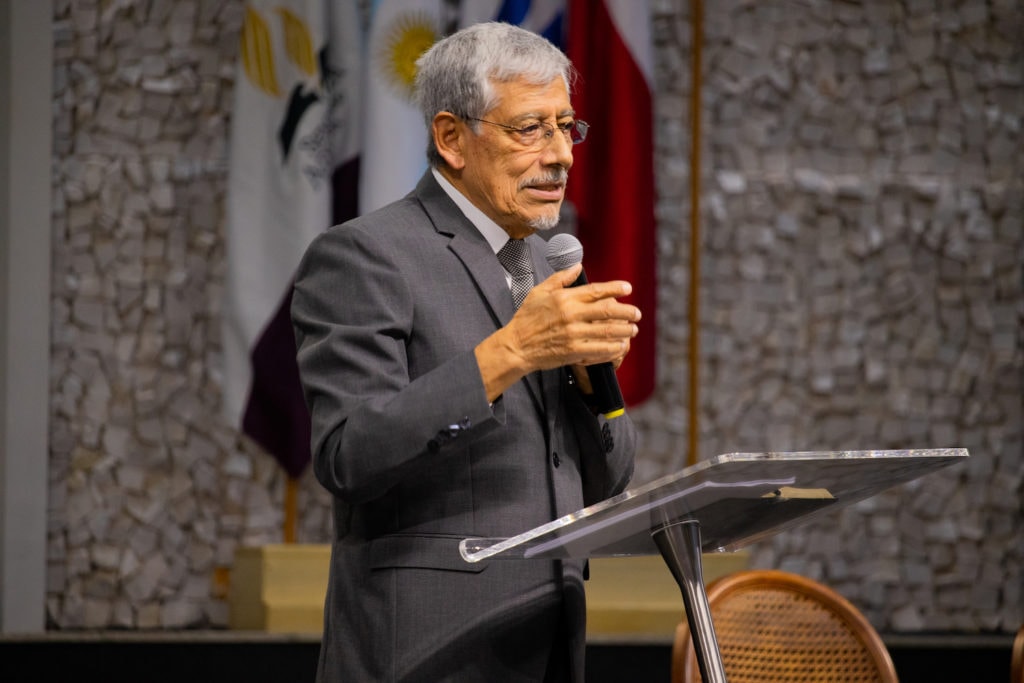
More than 400 people signed up to attend the symposium and a related Biblical Research Committee meeting held a day earlier. Organizers reported that the symposium covered topics such as the interpretation of biblical texts, the relationship of the book of Daniel with other parts of the Bible, the book’s literary contribution, and discussions about the behavior of the prophet and his friends.
One of the people excited about the presentations and the Q&A sessions was public officer Gabriela Saldanha da Cruz, from nearby Maringá. Even though she has no theological background, she said she is passionate about studying the books of Daniel and Revelation. She especially enjoyed the times for comments after the presentations. “The participants’ contributions have made the program more enriching,” Saldanha da Cruz said.
Relevance of the Book
Peruvian theologian Merling Alomía, a scholar in Old Testament and biblical archaeology, is close to completing his career as a university professor, which started in 1975. During his extensive career, he released four books and a magazine about the book of Daniel.
With the authority of his scholarly research on the topic, Alomía said the book of Daniel is extremely relevant because it highlights what is happening with God’s remnant people and why this group becomes victorious. “Without the book of Daniel, the book of Revelation would make no sense,” Alomía said. “The prophet writes not only for his time but also for us today,” he emphasized.
Intertextuality Discussed
On the first day of the event, several presenters discussed intertextuality, or the relationship between texts. Speakers emphasized how important it is to interpret biblical texts taking into account how a particular author referenced other texts written earlier. For instance, Jesus quotes Daniel, who, in turn, quotes or echoes statements written earlier by the prophet Jeremiah.

In this sense, Paraná Adventist College professor Felipe Massotti explained, “apocalyptic prophecy is expressed through repeated references to earlier texts.” He added, “It is essential to get to know the various modern approaches to the phenomenon of textual parallelism in the Hebrew Bible through a thorough study of how ancient authors read and reused the texts that preceded them.”
Faithful to Scripture
Adventist Church Biblical Research Institute director Elias Brasil de Souza discussed the dangers of current cultural trends that attempt to minimize the importance of the biblical text. According to him, “There is both a risk of a complete rejection of culture around us, which would create a kind of religious isolation, and an indiscriminate assimilation of the cultural agenda that conflicts with established principles.”
Brasil de Souza said that deep study of Daniel helps us to understand two important concepts that can inoculate us against the incorporation of cultural elements that mischaracterize biblical beliefs.
“First, the prophet and his friends represent a model of experience that anticipates what will happen to God’s faithful people as they try to live consistently God-given teachings in the end of time,” he said. And secondly, he added, the book highlights the idea of becoming wise in the things of God. “It is something very present in the book, something which encourages a total dependence on the Lord as it rejects blind trust in human beings as historical heroes,” he said.
The original version of this story was posted on the South American Division Portuguese-language news site.
About the Author
adventist-review
Sign up for the newsletter
Get the latest Adventist news straight into your inbox.
Follow us:
Related

A Handful of Walnuts a Day May Make Your Diet Less Inflammatory
Published research findings add to previous studies about the role of nuts in human diet.
Larry Becker
October 18, 2026

Adventist Intercultural Marriages Have Skyrocketed. Is That a Positive Sign?
A pastor and psychotherapist dissects the implications of an increasing trend.
Marcos Paseggi
October 16, 2026

Treasurer Confirms Record Mission Investment Ahead of OneVoice27
Paul H. Douglas’ report highlights mobilization of resources “as never before.”
Marcos Paseggi
October 15, 2026

Church Manual Will Undergo “Comprehensive” Revision Before 2030
Delegates seek clarity on scope of revision, and motion passes 167 to 32.
Jarrod Stackelroth
October 15, 2026
Comments
Advertisement
