July 3, 2017
Interfaith Leadership: A Primer
Interfaith Leadership is part sociology text, part case study, part road map.
by
Stephen Chavez
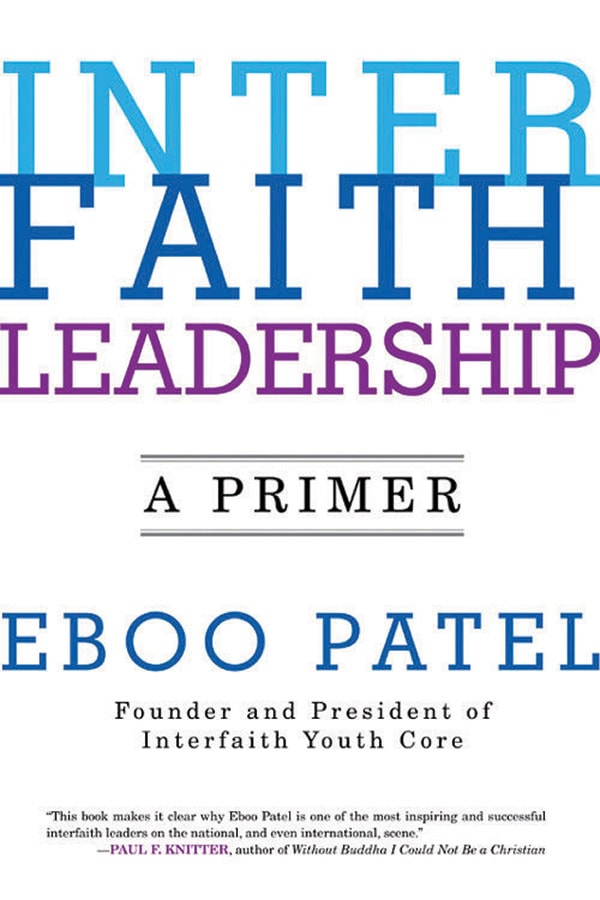
I grew up in southern California not long after God invented dirt. Back in those days my world revolved around all things Seventh-day Adventist: home, school, church, Pathfinders, etc. I knew there were people called Baptists, Methodists, Presbyterians, and Catholics; we even had a Jewish family living in our neighborhood.
Now I live in the metropolitan area of Washington, D.C. I typically drive to church past Jewish synagogues, Muslim mosques, and temples for Sikhs, Hindus, and Buddhists. Anyone who believes that society can be divided into neat categories, such as believers or nonbelievers, Catholics or Protestants, Christians or Jews, is living in a world that no longer exists. We live in a culture that requires an understanding and appreciation of the religious beliefs embraced by those with whom we share space in our communities.
Eboo Patel, founder and president of Interfaith Youth Core, is uniquely equipped to speak to the need for people of faith to engage in constructive activities and conversations. A sociologist of Indian ancestry, Patel, a Muslim, has been influenced by Christians, Muslims, Buddhists, and others to bring young people of different faiths together for service and dialogue.
Interfaith Leadership is part sociology text, part case study, part road map. In it Patel maintains that when we understand the faith practices of others, our own faith is established and confirmed. He rejects bigotry in all its forms, and resists stereotypes that paint all groups with the same broad brush, whether they are Catholic, Muslim, Republican, or Seventh-day Adventist; and he encourages his readers to do the same.
Underlying the urgency with which the author approaches this subject is the bigotry that manifested itself in Charleston, South Carolina, in 2015, when nine parishioners were killed at a Bible study at Emanuel African Methodist Episcopal Church. On the Sunday after the shooting, Jermaine Watkins stepped into the pulpit and said, “To hatred, we say no way, not today. To racism, we say no way, not today. . . . To racial fear, we say no way, not today.”
In a society often characterized by fear of “the other,” Patel challenges readers to imagine and live in a world in which people of different faiths not only coexist, but come together to serve others for the greater good.
About the Author
Sign up for the newsletter
Get the latest Adventist news straight into your inbox.
Follow us:
Related

A Broad Wealth of Ideas and Biblical-Ethical Counsel
This volume comprises 20 chapters by 22 authors on a range of technology-related topics.
Eric Louw
July 28, 2026

Gerhard Pfandl’s “Sola Scriptura”
This book offers a brief but comprehensive overview of how sola scriptura became a key tenet in Protestant thought, and why that remains important for us.
Shawn Boonstra
May 27, 2026

Charlie Kirk’s Stop, in the Name of God
The book will help people learn about the Sabbath and the Adventist Church. Some will be led to honor the Sabbath. Others will use his book to champion blue laws.
Joe Reeves
December 22, 2025

How’s Your Heart?
We need more than a simple routine procedure, we need a full heart transplant.
Beth Thomas
January 30, 2023
Comments
Advertisement
