
Pastor Chua Banaag—born July 26, 1909, to Benito Chua and Emilia Banaag in Siniloan, Laguna—was a church leader and religious freedom advocate in the Philippines.1 His parents named him “Pastor” because his mother hoped that he would become a gospel minister. His early life was characterized by the constant encouragement and Christian modeling of a godly mother. While a teen, he would come home from his work as a stenographer at the Everett Steamship Lines on Sabbath afternoons to attend the Trozo Adventist church’s young people’s meetings. There he was befriended by Jose Herrera, Antonio Abawag, and Eliseo Arevalo. Their friendship, and later the prayers and influence of his wife, Rosario, played major roles in his conversion to Seventh-day Adventism in 1934.
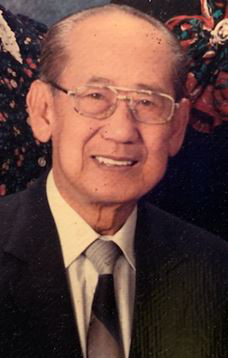
After he was baptized, Pastor Chua Banaag resigned from his job because of Sabbathkeeping issues. An opportunity arose to serve the Philippine Union Mission as an office secretary, a job he did for almost five years. He was then called to serve South-Central Luzon Mission as director of the Sabbath School and Lay Activities departments. He held this position from May 1940 to April 1948.
During World War II, the Adventist work in the Philippines was greatly affected. On two occasions during the Japanese occupation in the Philippines, Pastor Banaag almost lost his life. On one occasion, he and Pastor Manuel were taken to the military commander’s headquarters, where they were accused of blowing up a bridge. This was a false accusation made by someone who wanted to earn the reward of a sack of rice for turning in suspects. When they said they were Adventist pastors, the commander tested them by offering them cigarettes. They refused the offer, and the commander ordered that they be let go. He said, “These are Adventist ministers as they claim.” How could he tell? The commander’s mother was an Adventist, so he was very familiar with Adventist beliefs.
On the second occasion, Pastor Banaag was taken to the killing fields. While lying face down on the ground, he looked up and saw the commander he had met earlier, and the commander recognized him as well. The commander then ordered him to be set free. Several years later it was Pastor Banaag’s privilege to baptize this commander at a “Flight of Time” evangelistic crusade in San Pablo, Laguna. At his baptism the commander said: “I freed you from death by the guerillas, but you brought me salvation to free me from the death of sin.”
The post-war period found thousands of people in poverty. The Philippine Union Mission leadership and the Seventh-day Adventist Church in general distributed relief goods to people in need.2 Slowly the various activities and operations of the church resumed.
After the war, Pastor and Rosario Banaag ministered at the local women’s correctional institute and at Bilibid Prison. Because of his work with the inmates, Pastor Banaag was able to secure a pardon for four convicts sentenced to death. The convicts were baptized while in prison. Two other newly converted Adventists were sentenced to die, and Pastor Banaag witnessed their executions and arranged for their funerals. This made an impression on the other prisoners because funerals were generally not provided for executed criminals. But Pastor Banaag bought coffins and arranged for singers and a funeral service—a first for that prison.
Pastor Banaag later served as a church administrator, including as Sabbath School and Home Missionary secretary for the North Philippine Union Mission, president of Central Luzon Mission, executive secretary of the Religious Liberty Association of the Philippines, and executive secretary of the Temperance Association of the Philippines and the National Executive Committee for Alcoholism Prevention.3 He was also the creator and editor of the first Adventist magazine outside the United States that advocated religious freedom, which was named Freedom.
Whether composing poetry as a makata (poet) or calling on the congregation to support a conference initiative, Pastor Banaag always rose to the occasion. The principle on which he operated was: “When you do what’s important to the Lord, He’ll do what’s important to you.” His ministry left a lasting influence on the Adventist Church in the Philippines. He died January 18, 2003, at the age of 93.
This article is from the Encyclopedia of Seventh-day Adventists, which is available here.
1 Pastor C. Banaag’s Service Record, Southern Asia Pacific Division Archives.
2 J. R. Ferren. “Distributing Welfare Packages in Manila,” Adventist Review and Sabbath Herald, January 29, 1953, p. 16.
3 Pastor C. Banaag’s Service Record.
About the Author
Merle Poirier
Sign up for the newsletter
Get the latest Adventist news straight into your inbox.
Follow us:
Related

Treasurer Confirms Record Mission Investment Ahead of OneVoice27
Paul H. Douglas’ report highlights mobilization of resources “as never before.”
Marcos Paseggi
October 15, 2026

Church Manual Will Undergo “Comprehensive” Revision Before 2030
Delegates seek clarity on scope of revision, and motion passes 167 to 32.
Jarrod Stackelroth
October 15, 2026

Adventist Church Marks 100 Years of Working Policy
“Policy is the framework that makes mission possible,” church leaders say.
Libna Stevens
October 14, 2026

Global Mission Centers Introduce New Bible Studies for Diverse Communities
In response to frequent requests for contextualized Bible study resources, the Seventh-day Adventist Church’s Global Mission Centers have developed six new study guides adaptable to local communities.
Alyssa Truman
October 13, 2026
Comments
Advertisement
