June 2, 2023
Communion Service Brings Renewed Meaning Through a Twist
by

What does a Seventh-day Adventist pastor do to organize and lead a Communion service?
Those who have grown up in the Adventist Church don’t need to be a pastor to know about this service. Communion usually starts with reviewing the example of Jesus in the Gospels when He led the first ceremony and commanded His followers, “Do this in remembrance of Me” (Luke 22:19). The service might then move to Paul’s additional instructions to the early Christians in the city of Corinth (1 Cor. 11:23–26).
Now, what does an Adventist pastor do when many of those attending a Communion service at the church they lead are not acquainted with the Bible, Jesus, or His teachings? How can ministers lead those people to understand this ancient rite — also known as “the Lord’s Supper — when their worldview is the polar opposite of a Christian one?
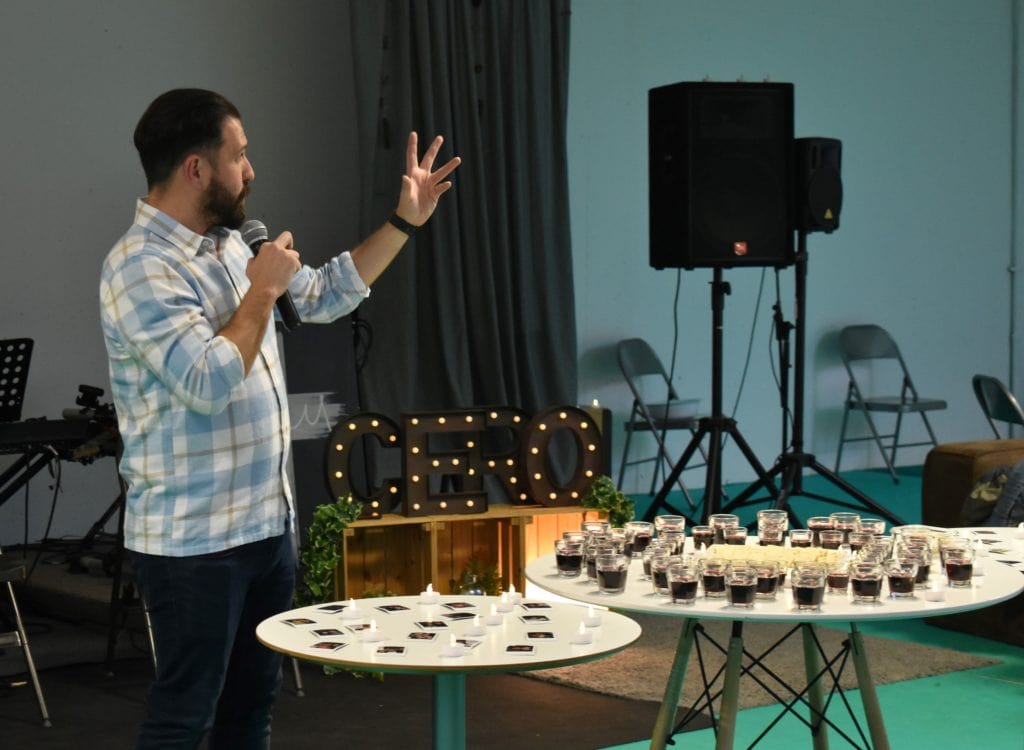
These questions are not theoretical. It is what Jonathan Contero, pastor of the Iglesia CERO — literally, “Zero Church” — in Madrid, Spain, has had to ask as the congregation he leads reaches out to a mostly secular, agnostic, and post-modern public.

The Role of Culture
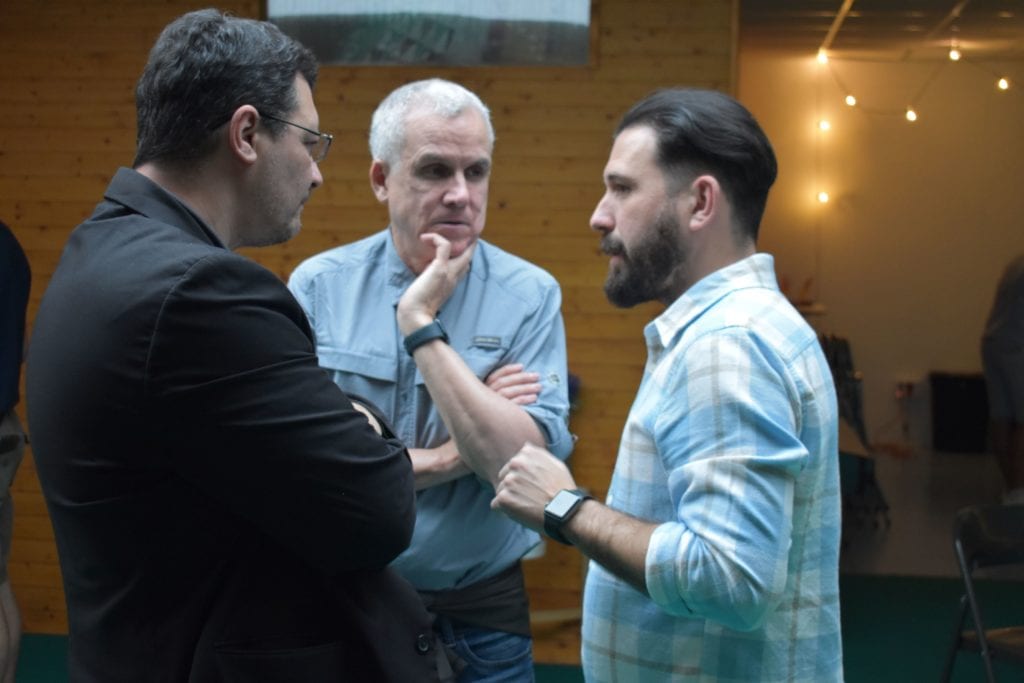
Contero knows that moving from “Zero” to belief takes time, painstaking effort, and a lot of prayer. “Some of our regular visitors and attendees are not even Christian,” he explains. “They haven’t been wired into many of the elements that, as Christians, we take for granted. Without a context, most of our regular ceremonies and activities might sound unintelligible.”
In the case of Iglesia CERO, a ministry that enlists the support of two Seventh-day Adventist institutions, Adventist Mission and the General Conference Center for Secular and Postmodern Studies, Contero has found that a focus on culture can help bridge that knowledge gap. What is more, cultural elements can usually help participants get closer to the biblical significance of a Christian ceremony.
“How do you connect with people who might be agnostic or even atheist but who, nevertheless, feel some kind of connection with our congregation and decide to attend the ceremony?” Contero asks, before answering his own question. “Culture. You connect through culture.”
At Iglesia CERO, this is exactly what the congregation tried to apply during a special Communion service on May 19.
From Hospitality to Jesus
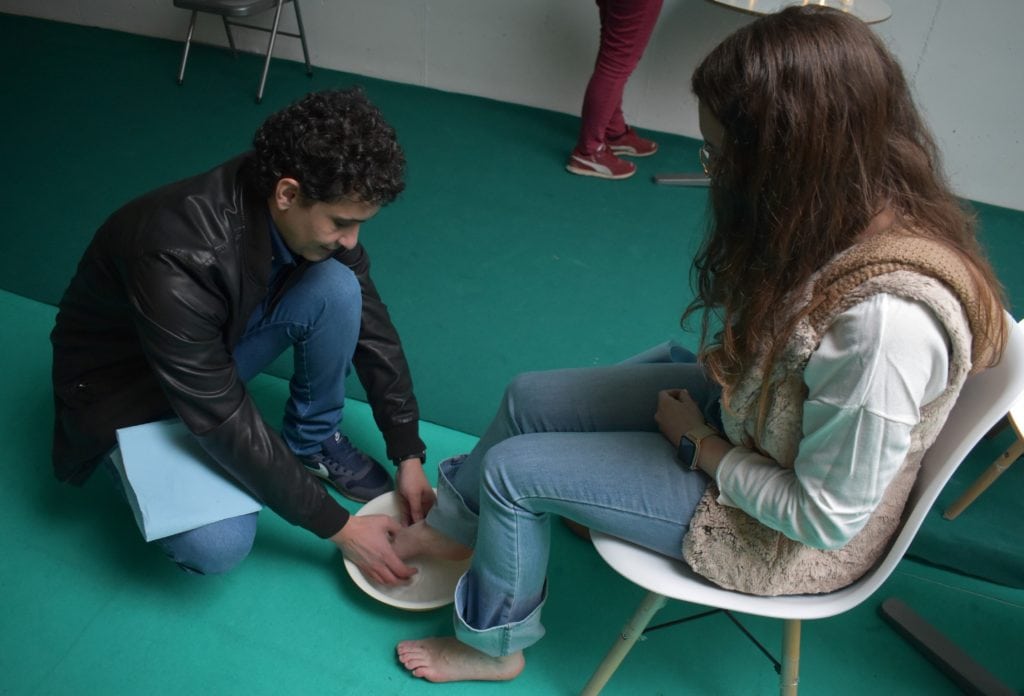
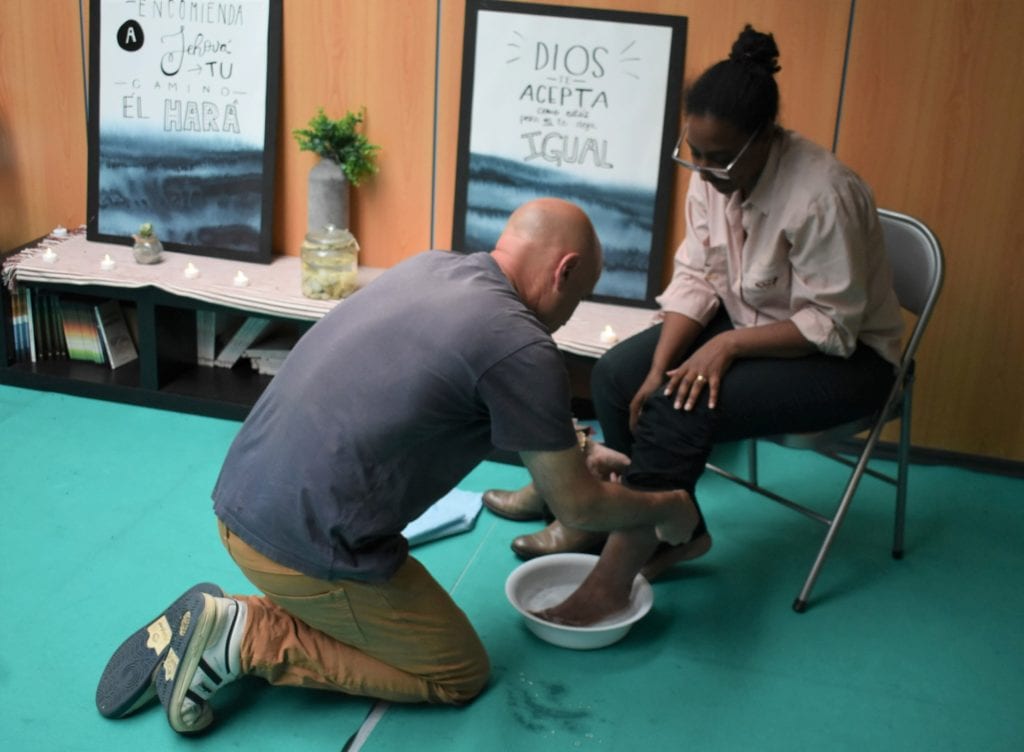
At first sight, the ceremony of the Lord’s Supper at Iglesia CERO seems to differ from a “standard” Adventist Communion service. The focus of the foot washing ceremony is, at least initially, on the rite as a Middle Eastern show of hospitality to visitors and strangers.
“Hospitality was very important for Middle Eastern culture,” a free brochure distributed at the service reads. “In ancient times, a visitor to a home was welcome as a distinguished guest of honor, as the host would offer him food, drink, and a place to stay.”
After putting the foot washing practice into context — an activity meant to help guests recover from walking for hours through dusty roads — the brochure emphasizes that only a slave or low-rank servant would fulfill that duty. Only then does it move to highlight the example of a man called Jesus, inviting participants to follow that example of humility.


The Pesach Connection
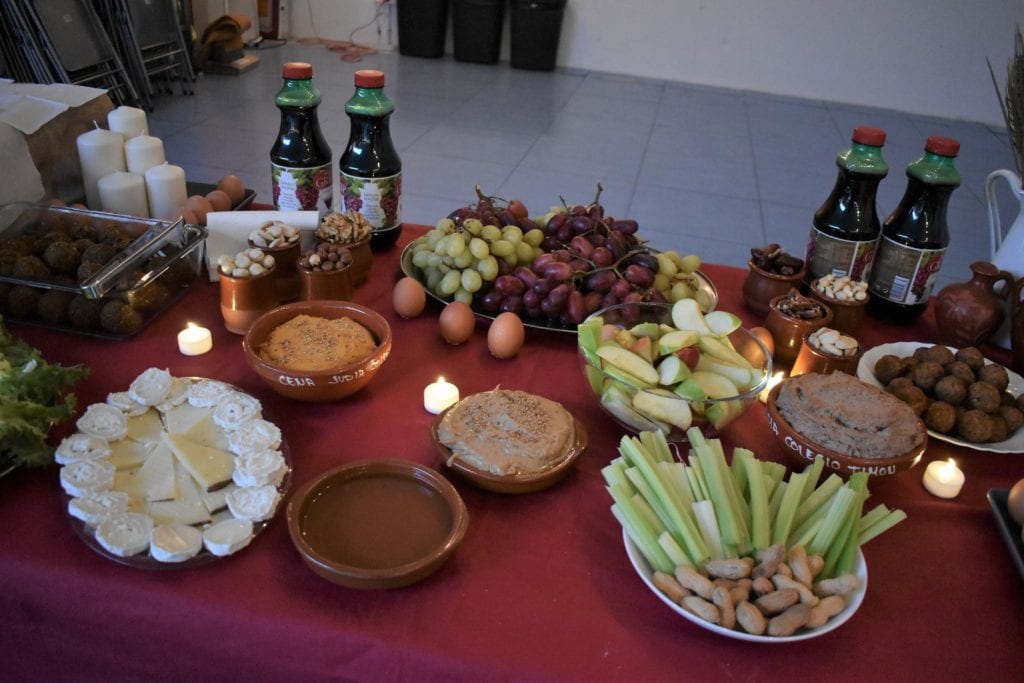
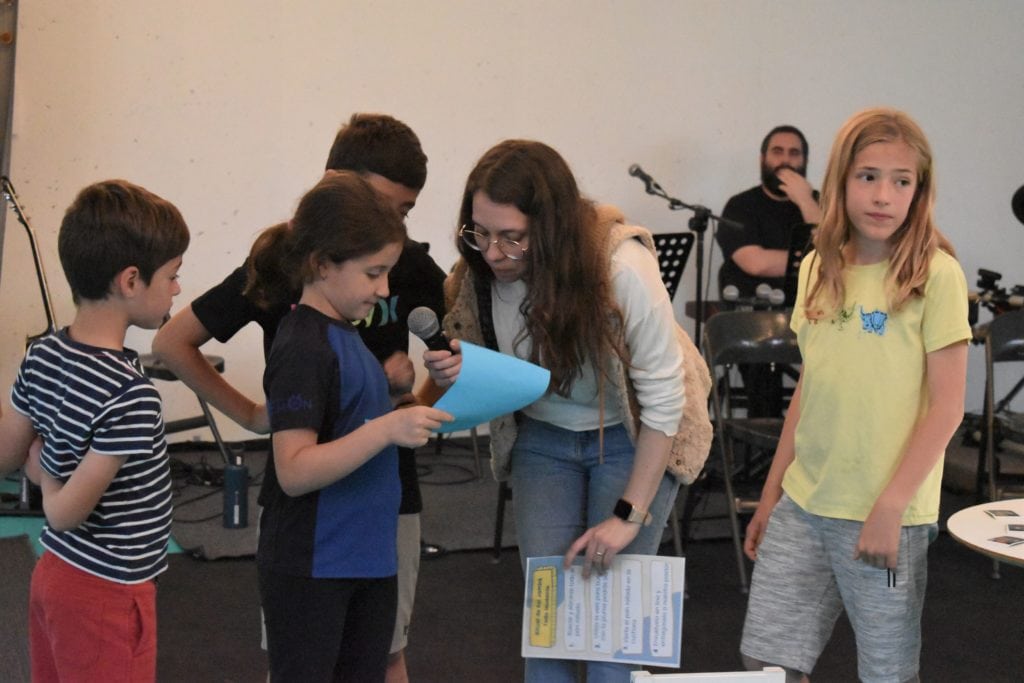
The discussion of what we now call the Lord’s Supper also highlights the original intent of the ceremony, namely, to remember Israel’s liberation from Egypt. At Iglesia CERO, a volunteer explains key elements of the Jewish Pesach (or Passover) celebration and how those elements are meaningful as ways to remember God’s presence in human life. Children in the congregation also participate, sharing some of the cultural and social implications of the practice.
A table includes foods with Middle Eastern and Spanish undertones. It provides context to a ceremony that eventually moves from mere cultural elements to the redefinition of the rite as given by Jesus and explained by Paul in the early Christian Church.
“At Iglesia CERO, our timeframe is different from your regular evangelistic meeting,” Contero shares on the sidelines of the May 19 service. “Tonight, we have people here that arrived years ago as self-declared atheists. Now they have reached a point where they have accepted Jesus. Others have arrived more recently with no Christian background and are still trying to understand what this is all about,” he says.
Telling Your Children
After opening the Bible and briefly reviewing Paul’s description of the Lord’s Supper in the context of the early Christian Church, Contero highlights still one additional element.
“In Israel, the instruction related to any meaningful event was to share it, especially with the next generation,” Contero emphasizes. “‘Tell your children about it,’ the Bible commands. Every element of the ceremony was designed to be shared and remembered.”
In this context, Contero believes that Iglesia CERO is doing just that, even with a post-Christian generation. “Through culture, food, and simple but meaningful ceremonies, we are sharing Jesus,” he says. “We are telling the story.”
About the Author
Liz E
Sign up for the newsletter
Get the latest Adventist news straight into your inbox.
Follow us:
Related

A Handful of Walnuts a Day May Make Your Diet Less Inflammatory
Published research findings add to previous studies about the role of nuts in human diet.
Larry Becker
October 18, 2026

Adventist Intercultural Marriages Have Skyrocketed. Is That a Positive Sign?
A pastor and psychotherapist dissects the implications of an increasing trend.
Marcos Paseggi
October 16, 2026

Treasurer Confirms Record Mission Investment Ahead of OneVoice27
Paul H. Douglas’ report highlights mobilization of resources “as never before.”
Marcos Paseggi
October 15, 2026

Church Manual Will Undergo “Comprehensive” Revision Before 2030
Delegates seek clarity on scope of revision, and motion passes 167 to 32.
Jarrod Stackelroth
October 15, 2026
Comments
Advertisement
